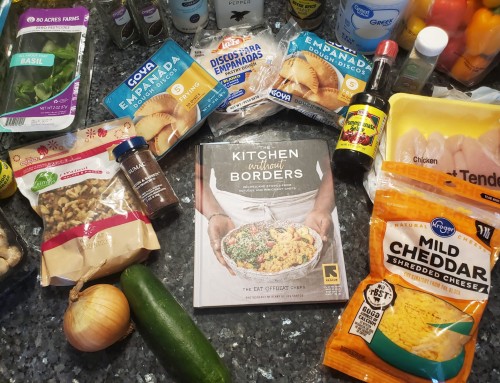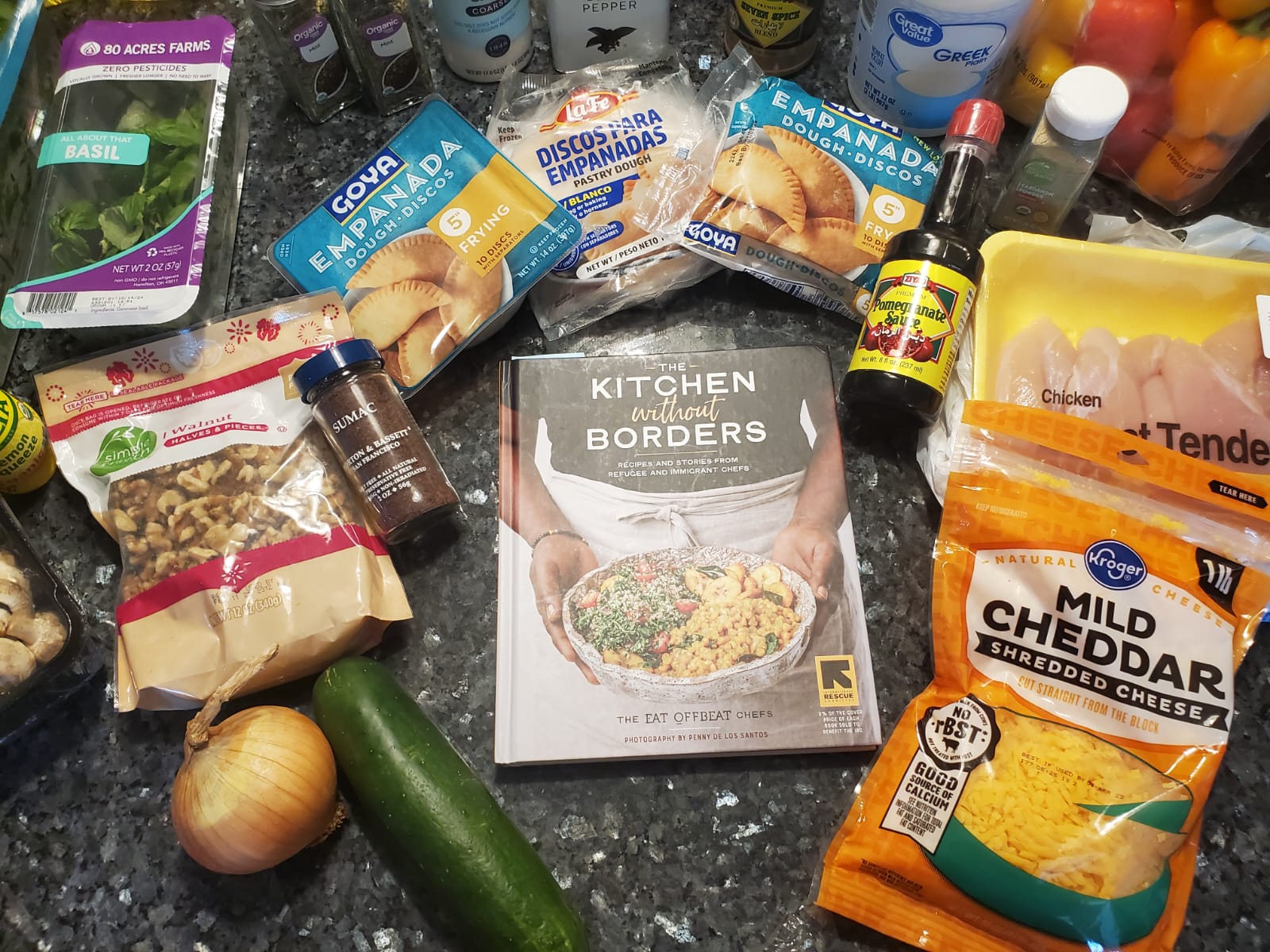
Last time, I explored both my familiar grocery store and an unfamiliar one to get all the ingredients to make a few Middle Eastern dishes. Now, let me tell you how those ingredients are being put to use as I (attempt to) cook. This post is not a “how to make” the following dishes, but a commentary on what it was like for me, a novice cook. The recipe book I used, “The Kitchen without Borders”, can be found HERE and we recommend it.
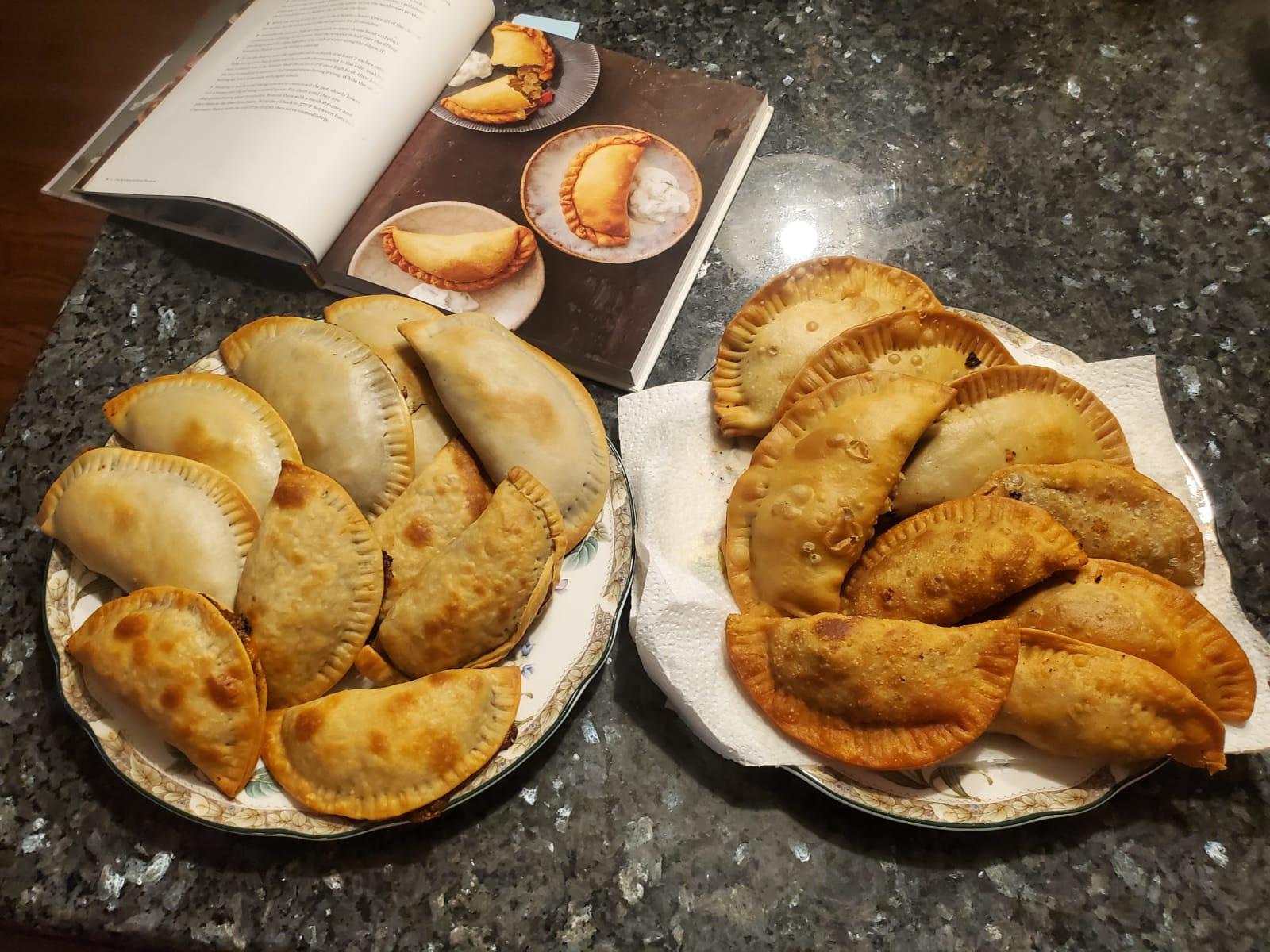
I started with the Iraqi fatayers (fe-tires) for my dad. The longest part was probably chopping all the peppers, mushrooms, and chicken to be able to add them quickly to a pot on the stove.
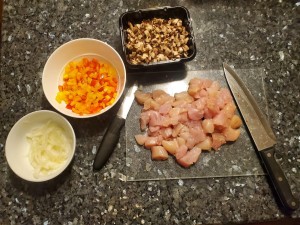
When it actually came time to get the pot sizzling, I began to realize how little I knew how to cook complex or flavorful dishes. My head was consistently pivoting. I would look back at the instructions two or three times, and then consult my sous chef, Google, for the interpretation. With practice, and after starting over because I burnt a wee bit of oil, I got into the hang of adding the different ingredients at various times.
Eventually, the stuffing for the fatayers was finally ready to be left to cool. I could then move on to the next dish. Borani esfenaj, a Persian spinach dip, seemed like something my mom would like to try. I was surprised by the amount of mint in the dish. There was so much mint! There was also supposed to be a good bit of garlic in it too, but I forgot it because, at this point, it had been a very long day of adventuring.
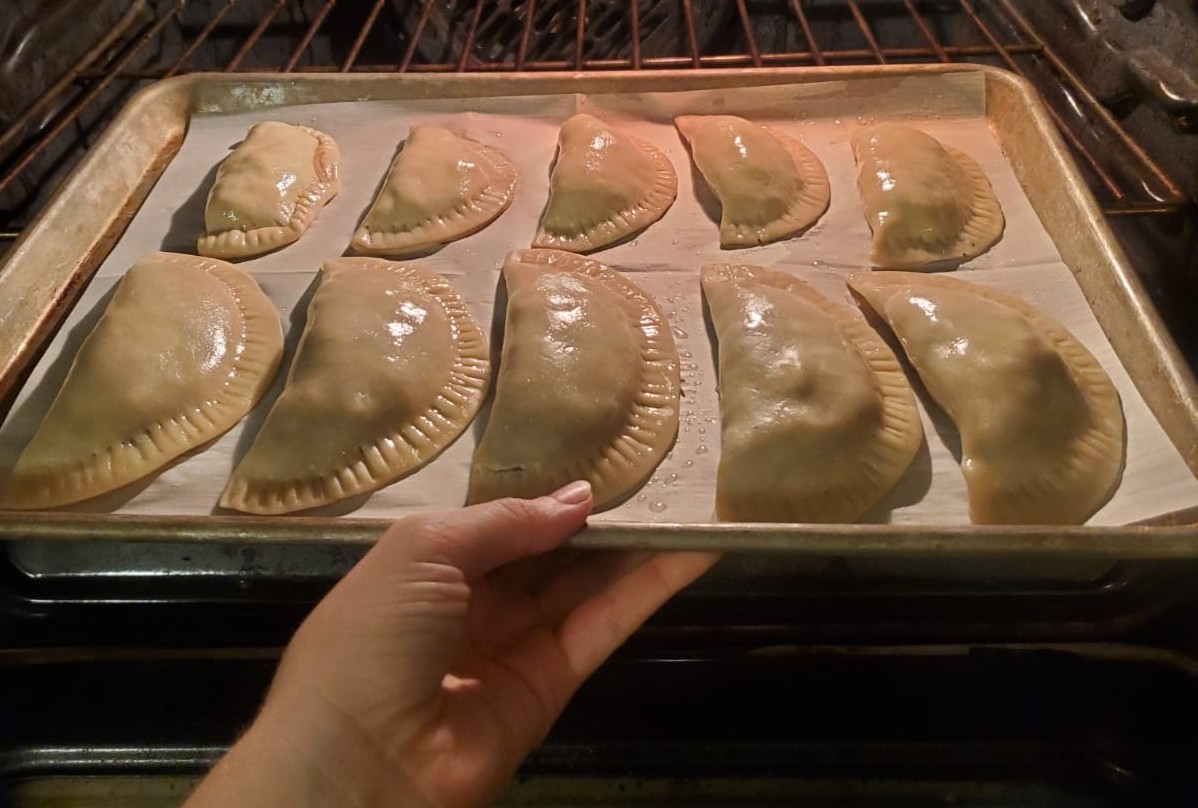
 Without a food processor to blend a mixture of walnuts, basil, and mint, I decided to use a personal-sized blender. (They are basically the same thing, right?) I laughed as this seemed like the American thing to do. The dip was finished by mixing all the blended ingredients along with spinach, salt, and pepper into the Greek yogurt (except for the garlic because I forgot that). Then it was time to tuck the cooled fatayer stuffing into their little dough blankets so that they could be fried or baked.
As I was assembling the fatayers, my parents came home and my mother wanted to try the dip. It was at that moment I realized I also forgot bread to eat the borani esfenaj with.

This could have been disheartening. It had been a very long day, and I kept accidentally not following the borani esfenaj recipe, and now we did not have a way to try it. However, this was an adventure, and adventures only have minor setbacks to make the plot more interesting. Moreover, setbacks often come with lessons mainly on patience when trying something new because things take longer, you make mistakes, but that does not mean you are not growing.
We eventually did get bread, and the fatayers did not get burned while being cooked, so I was able to share what the chefs in the book had given to me. Next up, you will get to hear the reactions of my parents and the others I shared with. Hopefully, it will almost be like you are able to taste the delicious food yourself!
Join us by volunteering in our local programs or check out what it looks like to serve internationally in Iraq or Kazakhstan!