
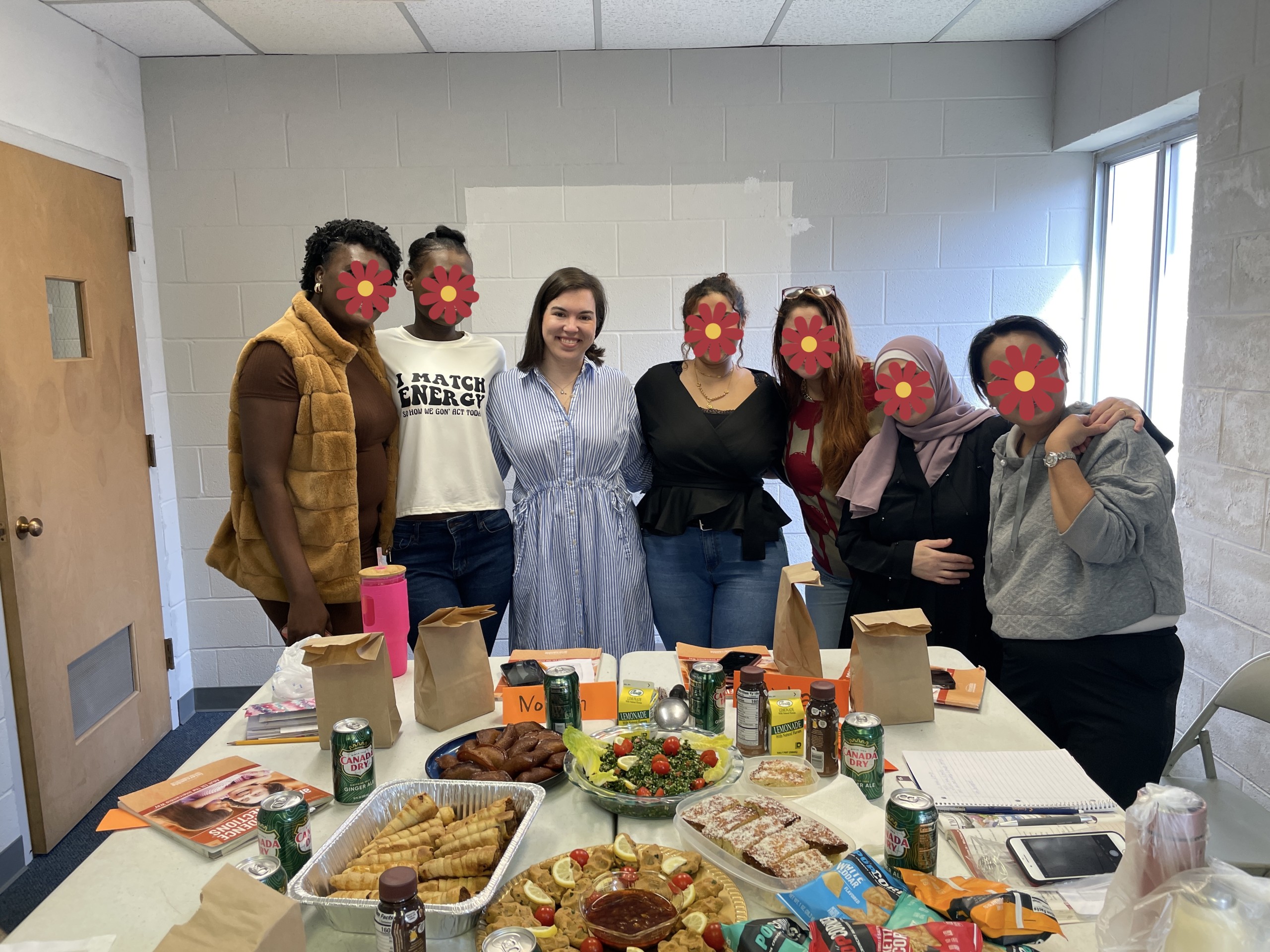
Americans like organization. I felt so accomplished when I organized my tool shelf: everything in boxes and labeled with my nifty little label maker. All the screws and nails together; all the electrical tools together. Another box with glue and tape. Everything in its place. Unfortunately, we like to do this with people, too. And often refugees end up in the same box together. There’s some sort of stereotypical “refugee” depending on each person’s experience or region. For some, a refugee might be “African” without taking into account the many countries in Africa. Or they might “look Middle Eastern” and be considered suspicious, even if they fled because they were persecuted as a Christian.
But not all refugees are the same. Refugees in America are from a wide variety of countries and religions. We have women in our English classes from almost 40 countries. And while a few of those aren’t technically refugees, most of them are. Some escaped persecution for their Christian faith in Myanmar. Others escaped civil war in Syria. Many of the Afghan people fled political persecution because they had served or worked with the American military. And their stories and cultures and languages are all different. Each one has their own life story and is a human being made in the image of God, deserving of dignity and respect.
None of these people dreamed of life outside their country until it became necessary. They were faced with the decision to leave or to face death or be sucked into constant warfare. So while they are all different with their unique stories, they are also looking for the same things that most Americans want. They want a safe place where they can raise their families. They want the freedom to go to school, to speak their native language in their home, and to be able go outside of their homes, without the constant expectation that they will be shot, bombed, beaten, or imprisoned.
Adapting to life here is harder than you think. When they get here, where it is “safe”, their bodies and minds don’t automatically release that tension. Here, there are dozens of new struggles and uncertainties. How will I eat, get around, get my kids in school; where will I live? All of these questions have to be answered with a bunch of strangers they’ve just met, in a language full of subtle shades and irregular verbs. All these questions have to be answered when you might be opening a car door for the first time, turning on a light switch for the first time, or seeing snow for the first time. What does life in America look like when the day you arrive happens to be Halloween and half the people working in the airport are in costumes? Adapting to a new culture is hard and full of so much uncertainty even if the expectation that your house might be bombed goes away.
Part of the reason it is hard is that both our international friends and we ourselves don’t know what we don’t know. Cultures are complex, full of rules and subtleties of politeness and rudeness. Is she being rude by refusing the tea? Or is it polite to refuse the first few offers? As the host, is offering multiple times expected and polite or is that considered pushy and rude? And while this can seem intimidating when stepping out to befriend the foreigner in our midst, this is one of the areas where I think Christians have a lot to offer. We are called to be people of grace and humility. Grace for the mistakes we and others make, and humility to apologize when we’ve offended. We have the opportunity to practice these in new ways when befriending people from other backgrounds. We get to admit that we make mistakes. We even get to admit to our sins and that Jesus has paid for them.
Refugees aren’t all the same, and neither are we. We each have our own set of tools, our history, culture, background, and lingo. We bring these wherever we go with similar goals of peace, prosperity, happiness, and life. But how those get expressed can be very different and can cause confusion, uncertainty, and miscommunication. It can be very hard because sometimes you don’t know why that person put the electrical tape in the tape box instead of the electrical box. But instead of being an opportunity for conflict, this can be an opportunity for learning and friendship, for joy and delight in seeing the world in a different way, both for us Americans and for our refugee friends.
Get involved in serving our refugee and immigrant neighbors!


